


The arrest of a Russian state-owned expedition vessel in Svalbard marks one of the most dramatic enforcement actions in modern arbitration practice, and highlights both the power and the limits of the international enforcement framework when award creditors pursue sovereign debtors across borders.
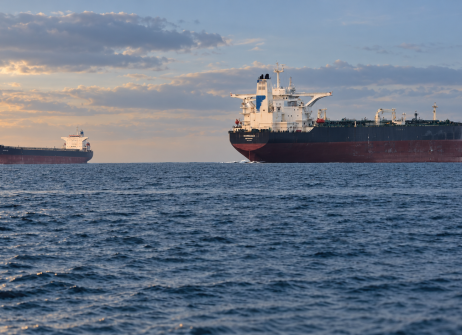
On 2 September 2026, Norwegian authorities seized the Professor Molchanov, a Russian Federation-owned ice-strengthened research and expedition cruise vessel, at the port of Barentsburg in the Norwegian Arctic archipelago of Svalbard. The seizure was ordered by the Nord-Troms and Senja District Court on 31 August 2026 at the request of NJSC Naftogaz of Ukraine, the Ukrainian state-owned energy company, as part of a global campaign to enforce a $4.22 billion arbitral award (plus interest and costs) against the Russian Federation.
The underlying award arises from investment arbitration proceedings brought under the 1998 Russia-Ukraine bilateral investment treaty. Naftogaz and six group companies initiated arbitration in 2016 through the Permanent Court of Arbitration under the 1976 UNCITRAL Arbitration Rules, seeking compensation for the expropriation of oil and gas assets following Russia’s annexation of Crimea in 2014. The tribunal found Russia liable for unlawful expropriation and issued its final damages award in April 2023. Russia has refused to pay and continues to challenge the award in set-aside proceedings before the Hague Court of Appeal.
The Enforcement Landscape
Enforcing a multi-billion-dollar arbitral award against a sovereign state that refuses to comply is one of the most formidable challenges in international dispute resolution. Naftogaz’s campaign illustrates the strategic complexity involved.
Because the Naftogaz award was rendered under the UNCITRAL Rules rather than the ICSID Convention, enforcement proceeds through the framework of the New York Convention on the Recognition and Enforcement of Foreign Arbitral Awards, as implemented in each enforcing state’s domestic law. The New York Convention creates a presumptive obligation to recognise and enforce foreign arbitral awards, subject only to a narrow and exhaustive set of grounds for refusal under Article V. As Gary Born explains in International Commercial Arbitration, the Convention was designed to “maximise the circulation of foreign arbitral awards” and establish a strong “pro-enforcement” policy across its now over 170 contracting states.
Naftogaz has secured recognition of the award in multiple jurisdictions, including Norway, England, France, and the United States, and has pursued enforcement against Russian state-owned assets in Finland (where more than 40 properties have been frozen), France (where mortgages have been registered over Russian state assets worth more than €120 million), and now Norway.
The Sovereign Immunity Hurdle
While recognition of the award may be obtained relatively straightforwardly where Russia does not cooperate with proceedings, execution against specific state assets raises a separate and more difficult question: sovereign immunity from execution.
The defence of state immunity is not mentioned in the New York Convention itself, but it is frequently invoked in practice by unsuccessful state parties resisting enforcement. The widely accepted “restrictive” doctrine of sovereign immunity, recognised in English law under the State Immunity Act 1978, and in Swiss law through the Federal Supreme Court’s longstanding case law, distinguishes between acts iure imperii (sovereign functions) and acts iure gestionis (commercial acts). Under this doctrine, property used for sovereign or governmental purposes is generally immune from execution, whereas property employed commercially may be subject to enforcement measures.
Under English law, Section 9 of the State Immunity Act 1978 provides that a state which has agreed in writing to arbitrate waives its immunity from suit in proceedings relating to the arbitration. However, as the Court of Appeal confirmed in Infrastructure Services Luxembourg S.à r.l. v The Kingdom of Spain [2024] EWCA Civ 1257, this does not automatically extend to immunity from execution against state property. Section 13 of the Act separately protects state assets from enforcement unless the property is “in use or intended for use for commercial purposes“. Thus, obtaining judgment on an award is relatively straightforward, while actually seizing state assets is much more difficult.
Swiss law takes a materially similar approach. As the Swiss Federal Department of Foreign Affairs explains, Switzerland applies the principle of “relative” state immunity, under which assets may be seized only where the state uses them in a private-law capacity. Assets presumed to serve sovereign purposes, including those of diplomatic missions and central banks, remain protected. The Swiss Federal Supreme Court has applied this framework in enforcement proceedings involving the Russian Federation (see, for example, Noga v Russian Federation, Swiss Federal Supreme Court, 5A_618/2007, 10 January 2008).
Why the Professor Molchanov?
The choice of the Professor Molchanov as an enforcement target reflects careful strategic thinking. The vessel is owned by the Russian Federation but used for commercial expedition cruises, including to Svalbard. Russia will almost certainly argue that the vessel serves governmental or scientific purposes and should be immune from execution. Naftogaz, represented by Covington & Burling LLP and Norwegian firm Wikborg Rein, will contend that its commercial cruise operations place it squarely in the iure gestionis category – property used for commercial purposes and therefore available for enforcement.
The unique legal setting of Svalbard adds further interest. While Svalbard is Norwegian sovereign territory, the 1920 Svalbard Treaty gives nationals of signatory states, including Russia, equal rights to settle and work there. Russia maintains a presence through its state-owned mining company Trust Arktikugol, which operates the settlement of Barentsburg. Naftogaz has previously obtained Norwegian court orders to seize Trust Arktikugol properties in Svalbard, including a rental guest house, though Russia has challenged those measures.
Looking Ahead
The Svalbard seizure is the latest salvo in what has become one of the most significant global asset recovery campaigns since the Yukos proceedings. Russia’s ambassador to Norway has denounced the seizure as “a politically motivated violation of international law“, while President Putin described it as an “act of state terrorism“. Norway has emphasised that the matter is a legal dispute between Naftogaz and Russia and does not involve the Norwegian government.
For businesses, investors, and states operating in sectors exposed to sovereign risk – energy, commodities, shipping, and infrastructure – the Naftogaz enforcement campaign underscores a critical reality: an arbitral award, however large, is only as valuable as the assets against which it can be executed. The strategic identification and pursuit of commercial state assets across multiple jurisdictions is complex, expensive, and politically sensitive, but, as the Professor Molchanov seizure demonstrates, it is far from impossible.
Fortior Law advises on international arbitration, cross-border enforcement, sanctions, and asset recovery matters across its offices in Geneva, Zurich, London, Kyiv, Nicosia, Taipei, and Tbilisi. For further information, please contact us at info@fortiorlaw.com.