



Executive Summary
The full-scale war between Russia and Ukraine has been going on since February 2022. For anyone signing commercial contracts after that date – especially in the grain, commodities, and shipping trades – a war in and around the Black Sea is nothing new or surprising. The risk is already built into freight rates, war-risk insurance premiums, and the way the parties split contractual risk. And under English law, an event that was known and expected when the contract was signed usually will not support a contractual force majeure defence.
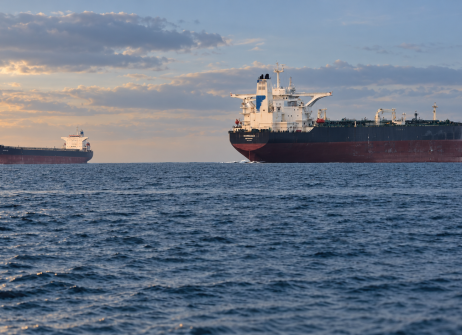
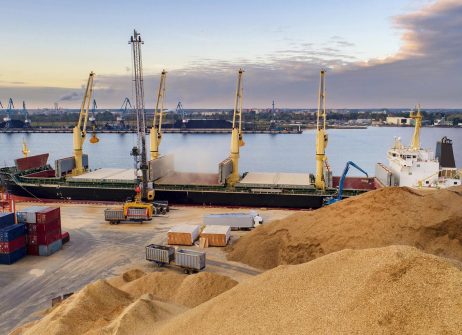
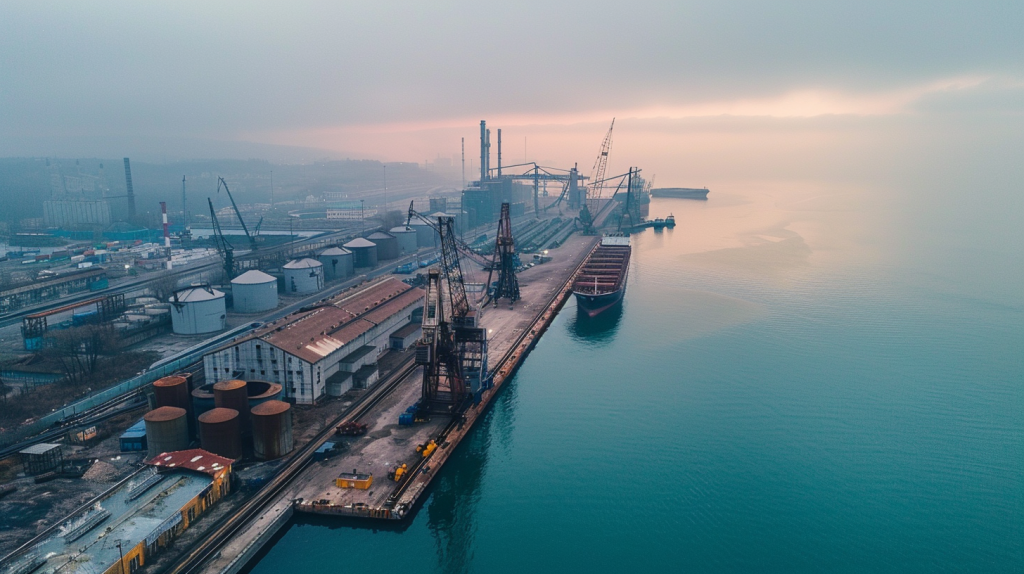
But this war has not stood still. Between roughly 10 and 23 July 2026, Russian forces ran an intense, organised wave of strikes – and this time the targets were not military. They hit civilian merchant ships, grain terminals and warehouses across the Greater Odesa port cluster: Odesa, Pivdenniy (Yuzhny) and Chornomorsk. The attacks killed seafarers, destroyed tens of thousands of tons of cargo, forced terminal operators to stop loading and led shipowners to stop sending vessels in at all.
This article asks whether that shift – from a general war risk to deliberate, repeated attacks on the civilian shipping supply chain – can count as a fresh force majeure event under English law, even though the war itself was entirely foreseeable. The short answer is: it depends on the clause. But there is a solid argument that this concentrated campaign is a new event, separate from the background war, so long as the party can meet the tests for causation, prevention, and notice.
The Factual Escalation: March–July 2026
Open-source reporting shows a clear pattern of escalation from March through July 2026, with a sharp spike in the second and third weeks of July.
Early Indicators (March–May 2026)
On 20 March, drone strikes damaged two bulk carriers in Chornomorsk port. By 19 May, the attacks had reached a Chinese-flagged ship approaching Odesa – serious enough that President Zelenskyy commented on it publicly.
The July Intensification
On 15 July 2026, the Institute for the Study of War described what it called an “intensified Russian strike campaign” aimed at port infrastructure in Odesa Oblast and at ships calling at Ukrainian ports. What followed was a fast run of destructive events:
13 July: Kernel Holding, Ukraine’s largest agricultural exporter, halted operations at Chornomorsk. A Togolese-flagged cargo ship in Odesa was hit, killing five crew and injuring ten.
14 July: Strikes hit Tanzanian- and Liberian-flagged merchant ships in the Black Sea corridor and a Marshall Islands-flagged ship at Odesa City Port. Kernel said the strikes on its Chornomorsk terminal destroyed about 25,000 tons of sunflower oil.
15 July: Agricultural analyst Bohdan Kostetskyi of Barva Invest said the strikes had “effectively stopped deep-water grain exports,” with major international traders pausing purchases and terminals shutting down.
17 July: Russian forces attacked Odesa port. A Marshall Islands-flagged ship was hit in its superstructure, caught fire and had to evacuate all 17 crew (four injured).
19 July: A Russian missile hit a Guinea-Bissau-flagged ship carrying grain near Odesa, killing four crew members.
23 July: Shipowners together stopped sending vessels into Ukraine’s Black Sea ports. Maersk temporarily suspended operations at Chornomorsk and Kyiv publicly admitted the ports had shut down.
24 July: Russia said that its forces had struck three Ukrainian ports overnight in attacks which had targeted infrastructure—including loading and unloading facilities and fuel reserves—which supported Kyiv’s armed forces. Russia’s Defence Ministry said air-launched missiles and strike drones had struck the ports of Odesa, Izmail and Mykolaiv as part of what it said was a campaign of heavy strikes against Ukraine.
26 July: In the Odesa region, the Turkish dry cargo vessel Golden Leo, carrying corn, sank. The vessel had been attacked by three Russian cruise missiles while leaving port on 19 July. Ten crew members died as a result.
In total, between 20 June and 20 July 2026, Russian forces hit 28 civilian merchant ships near Odesa, killing 21 seafarers and wounding 34, and sending freight rates sharply higher.
The English-Law Framework for Force Majeure
The term “force majeure” comes from French law, and English law has no stand-alone force majeure doctrine of its own. In England, force majeure works only through express contract clauses – the wording the parties themselves use to divide up the risk of unexpected events beyond their reasonable control.
To rely on such a clause, a party normally has to show three things: (i) an event that fits the clause’s definition; (ii) a real link between that event and its failure to perform; and (iii) that it followed the clause’s notice and mitigation (reasonable endeavors) requirements. Missing any one of these – even a procedural step like giving notice on time – can sink the claim.
The wording about impact matters a lot. A clause that only excuses a party when performance is “prevented” sets a higher bar than one that also covers performance being “hindered” or “delayed.” And higher cost or lower profit is not the same as prevention. Paying more to charter another vessel, higher war-risk premiums, or a thinner margin is not “prevention” – and usually not “hindrance” either.
In Classic Maritime Inc v Limbungan Makmur Sdn Bhd, the Court of Appeal confirmed that when a clause uses causation language (“resulting from,” “directly affects,” “causes”), the party has to meet a “but for” test: it must show that, without the force majeure event, it would actually have performed.
English law does not insist that a force majeure event be unforeseeable. In SHV Gas Supply and Trading SAS v Naftomar Shipping and Trading Co Ltd Inc, Christopher Clarke J held that the fact bad weather could have been predicted did not stop the clause from working: wars, strikes and unusual weather are often foreseeable, and covering them is exactly why these clauses exist.
That said, foreseeability still matters. If a risk was reasonably foreseeable when the contract was signed, a court may decide the parties already dealt with it – either by their choice of wording or by saying nothing about it. That is the heart of the problem here: parties who contracted mid-war are treated as having built the known conflict into their deal.
Distinguishing “Background War” from a Supervening Escalation
The key is to separate two things: (a) the general risk of armed conflict in the Black Sea – a risk every market participant has known about and priced in since early 2022 – and (b) a specific, sharp escalation that amounts to a new event. The facts support drawing that line. Between 10 and 23 July 2026, the threat changed from scattered, occasional attacks that a single ship could work around (with war-risk cover and re-routing) into an organised campaign of deliberate destruction aimed at the commercial infrastructure itself: terminals, warehouses, ships at berth, and ships under way.
The result was not just higher cost or more hassle. It was the physical destruction of loading capacity and a collective shutdown. Terminals closed. Operators stopped work. Shipowners stopped calling. The port cluster simply stopped functioning as a place to export from. That is the difference between a war that makes trade riskier and a campaign that makes trade impossible.
A force majeure clause that expressly lists “war,” “hostilities,” “acts of war,” “blockade,” “warlike operations” or physical destruction of the port or vessel does not need the war to be new. Each listed event, if it happens, is a trigger in its own right. A missile hitting a named ship at berth, a terminal being knocked out or a port authority closing the facility are each separate, identifiable events that fit this kind of wording. The real question is not whether “there is a war” (everyone knew that) but whether this strike, on this terminal, on this date physically stopped this party from performing.
Following Classic Maritime v Limbungan [2019] EWCA Civ 1102, the party has to show that, but for the particular strike or closure, it both would and could have performed. Other causes – an earlier default, an inability to source the goods, a regulatory breach, or simply market conditions that make performance unattractive – will sink the claim. So a grain seller loading at Chornomorsk who can show (i) it had grain allocated and ready, (ii) the terminal was struck or closed on a specific date, and (iii) no other terminal was available within the delivery window will have a strong claim to relief.
The mid-July events go well beyond higher war-risk premiums or higher freight, which the market had already been living with for years. When the terminal is destroyed, the berth cannot be used, or the shipowner refuses to send a vessel because doing so would put the crew in proven danger of being killed, that is prevention. Importantly, the duty to use reasonable endeavors does not require a party to send its vessel into an active strike zone just to “fix” the problem.
The obvious counterargument is that, by mid-2026, further escalation was itself foreseeable. There is something to that – but it mixes up two separate questions. As SHV Gas v Naftomar [2005] EWHC 2528 (Comm) confirms, foreseeability does not defeat a clause whose whole point is to allocate that exact kind of risk. A clause listing “war” or “hostilities” exists to cover precisely these events. The question is whether the specific casualty or closure prevented or hindered performance, not whether the parties could have pictured it happening. Foreseeability still matters to how risk is shared – but once a party has paid for protection through an express clause, the fact that the scenario was imaginable does not take that protection away.
Identifying a Candidate Triggering Date
Force majeure is not set off by a slow trend; it needs a specific event or turning point. A few candidates stand out from the facts:
Primary candidate: on or about 15 July 2026. This date brings several things together: (i) strikes across multiple ports in the Greater Odesa cluster; (ii) a documented loss of roughly one-third of Ukraine’s seaborne grain export capacity; (iii) terminal closures and operators standing down.
Alternative candidate: 23 July 2026. This is the day shipowners together stopped sending vessels in – in effect, the market’s own declaration that the ports could no longer be used.
For a particular contract, the key date may be earlier still – the specific incident that hit that party’s ship or terminal. For example, the 10-12 July destruction of Kernel’s Chornomorsk terminal (with approximately 54,000 tons of product lost) would be the trigger for any contract that depended on loading there. In the end, the analysis always turns on the specific contract and clause.
Frustration as a Fallback
If a contract has no force majeure clause at all, a party can fall back on the common-law doctrine of frustration. Frustration applies where an unexpected event makes performance impossible, illegal, or so radically different from what was promised that it would be unfair to hold the parties to the deal.
In Edwinton Commercial Corp v Tsavliris Russ (The Sea Angel) [2007] EWCA Civ 547, the Court of Appeal set out a multi-factor test: the court weighs the contract’s terms, the surrounding facts, what the parties knew and expected, and the nature of the event – foreseeability included. While foreseeability is not an absolute bar to frustration, it makes the claim much harder: a court will be reluctant to tear up a contract where the risk was foreseeable and could have been dealt with in the wording (National Carriers Ltd v Panalpina (Northern) Ltd [1981] AC 675).
As with force majeure, extra cost or inconvenience is not enough for frustration. The party would have to show that the July escalation made performance radically different – a high bar, though the physical destruction of the means of performance (the terminal or vessel) and the shutdown of the ports may clear it where the contract called for loading at a named port that can no longer be used.
Practical Guidance
Any party that may be affected should send a formal force majeure notice as soon as the triggering event happens. The notice should set out: (i) the exact clause being relied on; (ii) the event, including the date, nature, and location of the strike or closure; (iii) which obligations are affected; and (iv) how long it is expected to last or, if that is unknown, a promise to keep the other side updated. Missing the notice deadline can be fatal even when the underlying case is strong.
Parties should also gather and keep evidence as events unfold: port authority closure notices, messages from terminal operators, war-risk insurer advisories, shipping-line suspensions, satellite images, news reports, and the like. The more evidence there is, the stronger the causation argument.
The duty to use reasonable endeavors means looking into alternatives and writing down what you find. Were other ports (Reni or Izmail on the Danube) considered? Could rail to Baltic or Polish ports work within the contract window? Even if nothing else is realistic, a clear record of the effort shows good faith.
Anyone signing new contracts for Black Sea commodities should make sure the force majeure clause expressly covers war, hostilities, acts of war, blockade, destruction of a port or terminal, shipowners refusing to call, and government or port authority restrictions. Where it fits, a “safe port” warranty is also worth considering alongside the force majeure wording.
Conclusion
The Russia-Ukraine war, taken as a whole, is not force majeure for parties who signed knowing about the conflict. Everyone agrees on that. But English law does not treat “war” as one single, unchanging thing. A war can escalate. Its character can change. New acts of hostility – genuinely different from the background risk – can arise and trigger contractual protections on their own.
The intense, deliberate Russian campaign against civilian merchant ships, grain terminals, and port warehouses in the Greater Odesa cluster in July 2026 is exactly that kind of shift.
Whether that escalation counts as force majeure in any given case depends, as always, on: (i) the exact wording of the clause; (ii) whether the event truly prevented (or, under a “hindering” clause, hindered) that party’s performance; (iii) whether the “but for” causation test is met; and (iv) strict compliance with the notice and mitigation requirements. For parties whose performance was physically blocked by the destruction of a terminal, the closure of a port, or the proven danger to vessel and crew, the case is credible – and, under a well-drafted clause, strong. Without an express clause, frustration is still available in theory but faces higher hurdles. The practical takeaway is simple: send notices promptly, keep evidence carefully, document your mitigation efforts, and – for new contracts – make sure the force majeure clause is drafted precisely enough to capture the exact kind of event this campaign represents.